
CNRS Internship
Exa-MA WP1 - Terrain Mesh Generation for Urban Energy Modeling
Objective
During my internship, I focused on improving the terrain mesh generation process for urban energy simulations as part of the Exa-MA1 project at Cemosis2 a CNRS spin-off.
The goal was to build a C++ application to optimize 3D terrain mesh generation for finite element simulations in urban energy modeling. The pipeline sourced elevation data for any given geographical area using the Mapbox Terrain-RGB API3, processed it and used CGAL4 to create a Delaunay mesh constrained to contour lines.
Key Components
1. Terrain Mesh Generation
- Lambda-Generated Meshes:
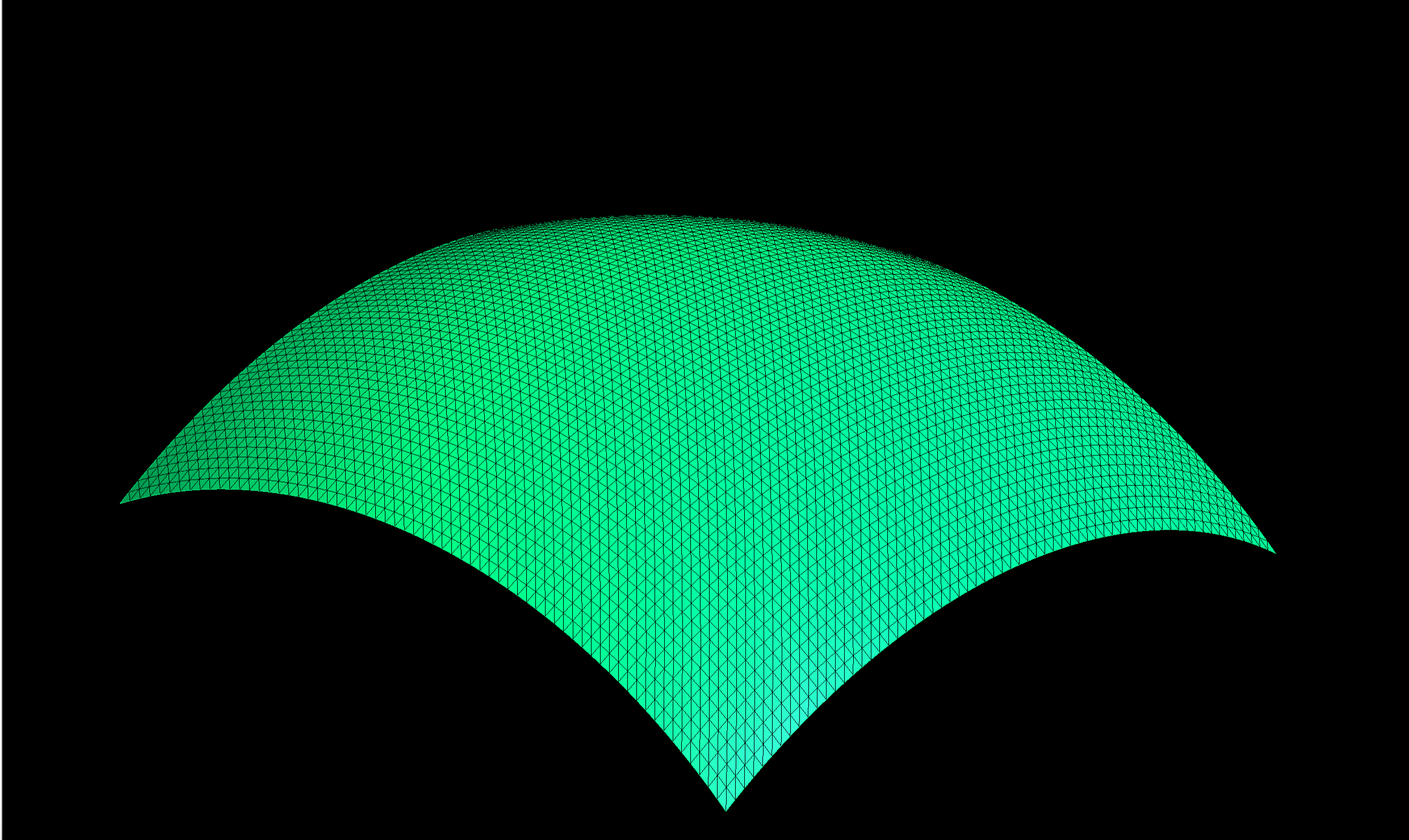
- Half-Sphere Terrain:
- This mesh was generated using a lambda function representing a half-sphere:
- Half-Sphere Terrain:
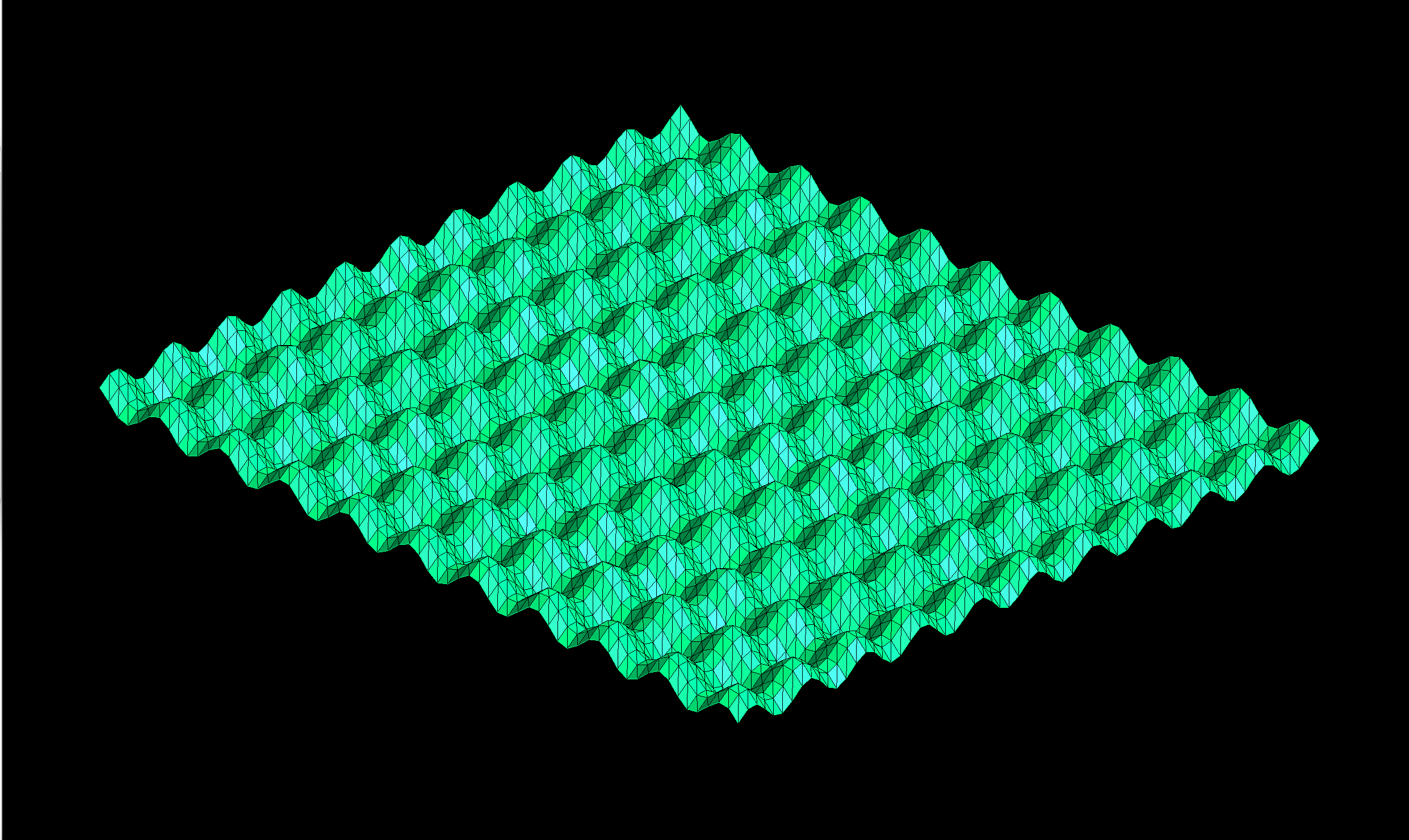
- Wave-Like Terrain:
- Another lambda-generated mesh with a wave-like surface:
- GPS Data-Driven Meshes:
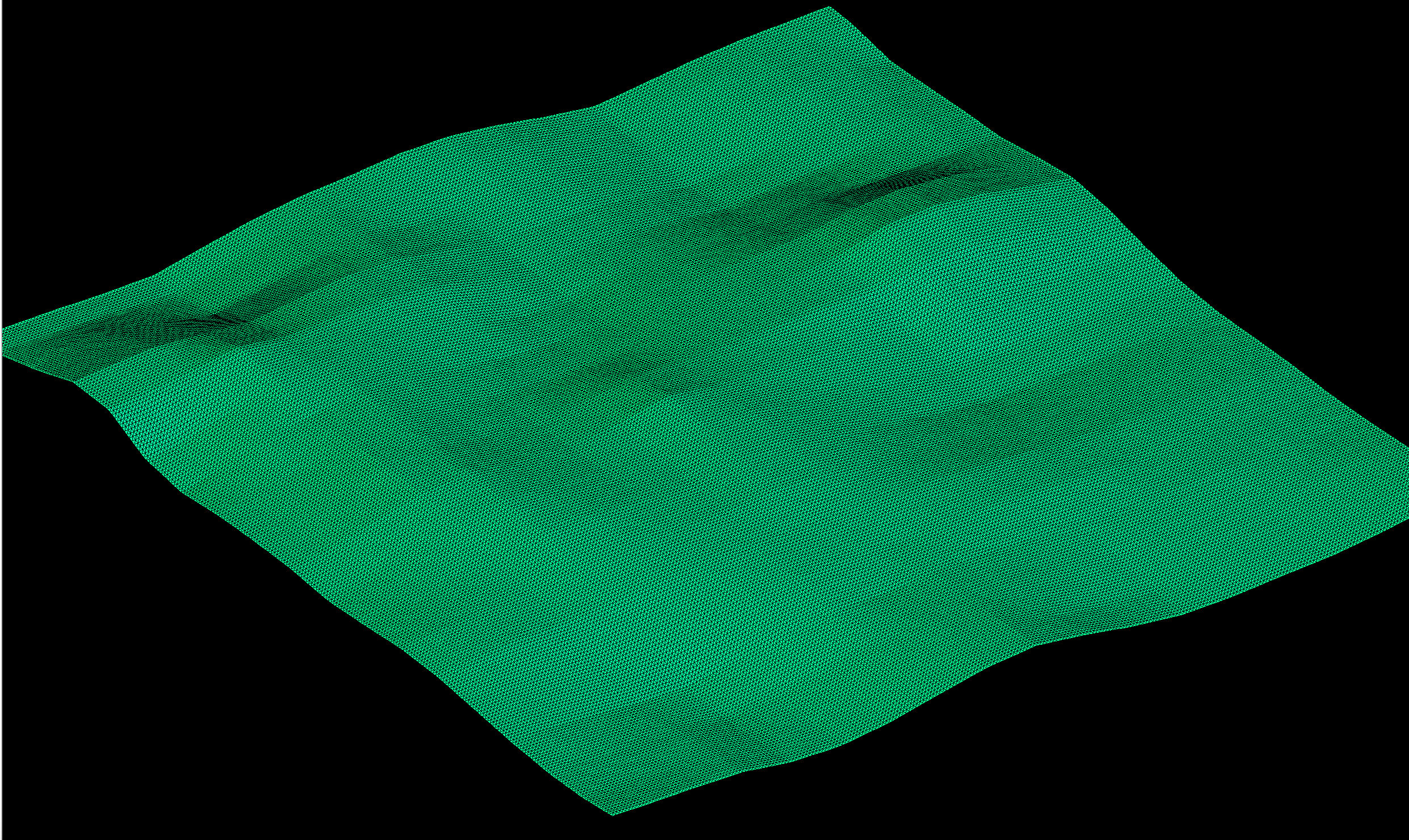
- Grenoble, France (Zoom Level 16):
- A real-world terrain mesh generated using elevation data from the Mapbox Terrain-RGB API. This high-resolution mesh captures the detailed topography of Grenoble.
- Grenoble, France (Zoom Level 16):
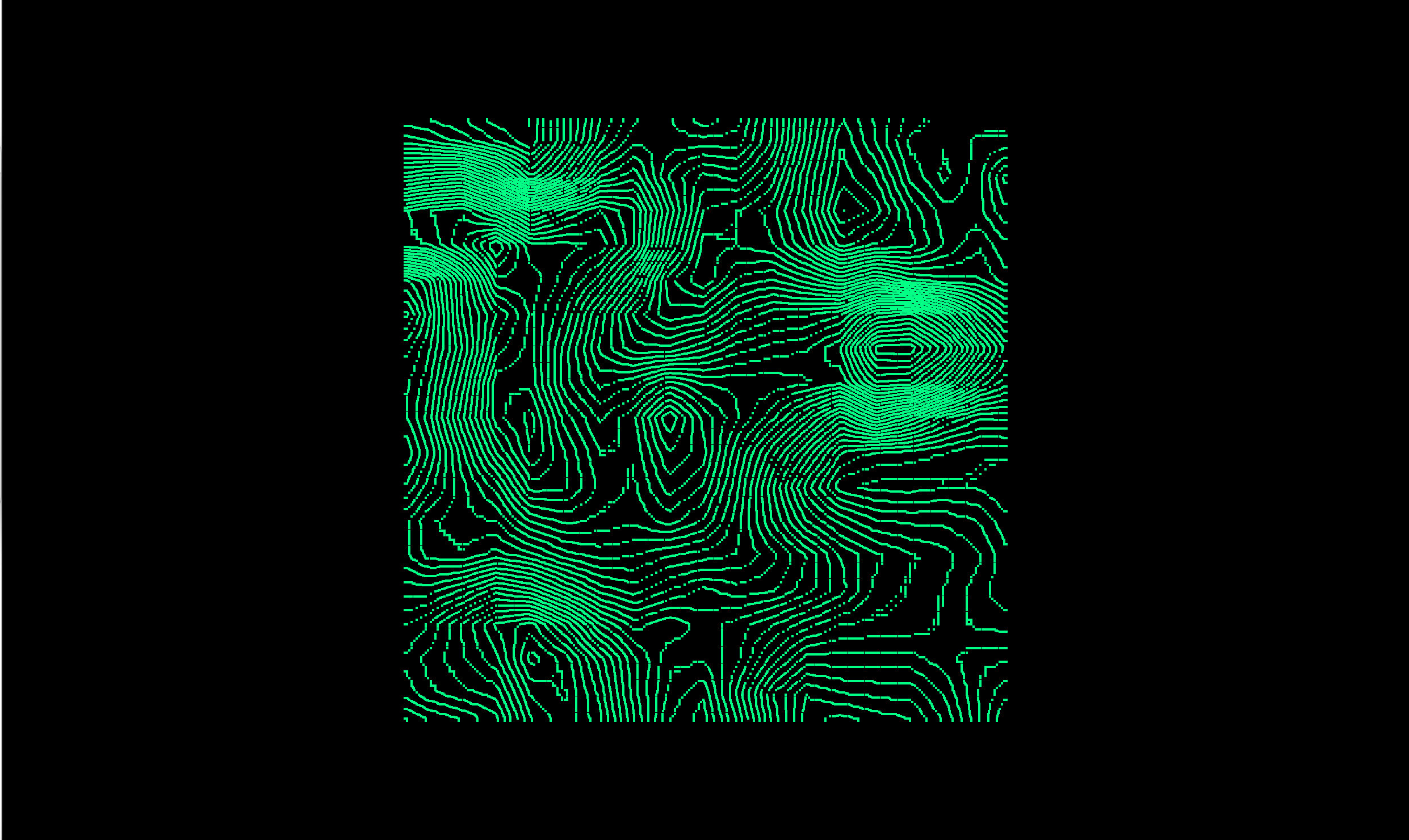
2. Contour Line Generation
- Implemented a method to generate and constrain terrain meshes along contour lines:
3. Re-Triangulation
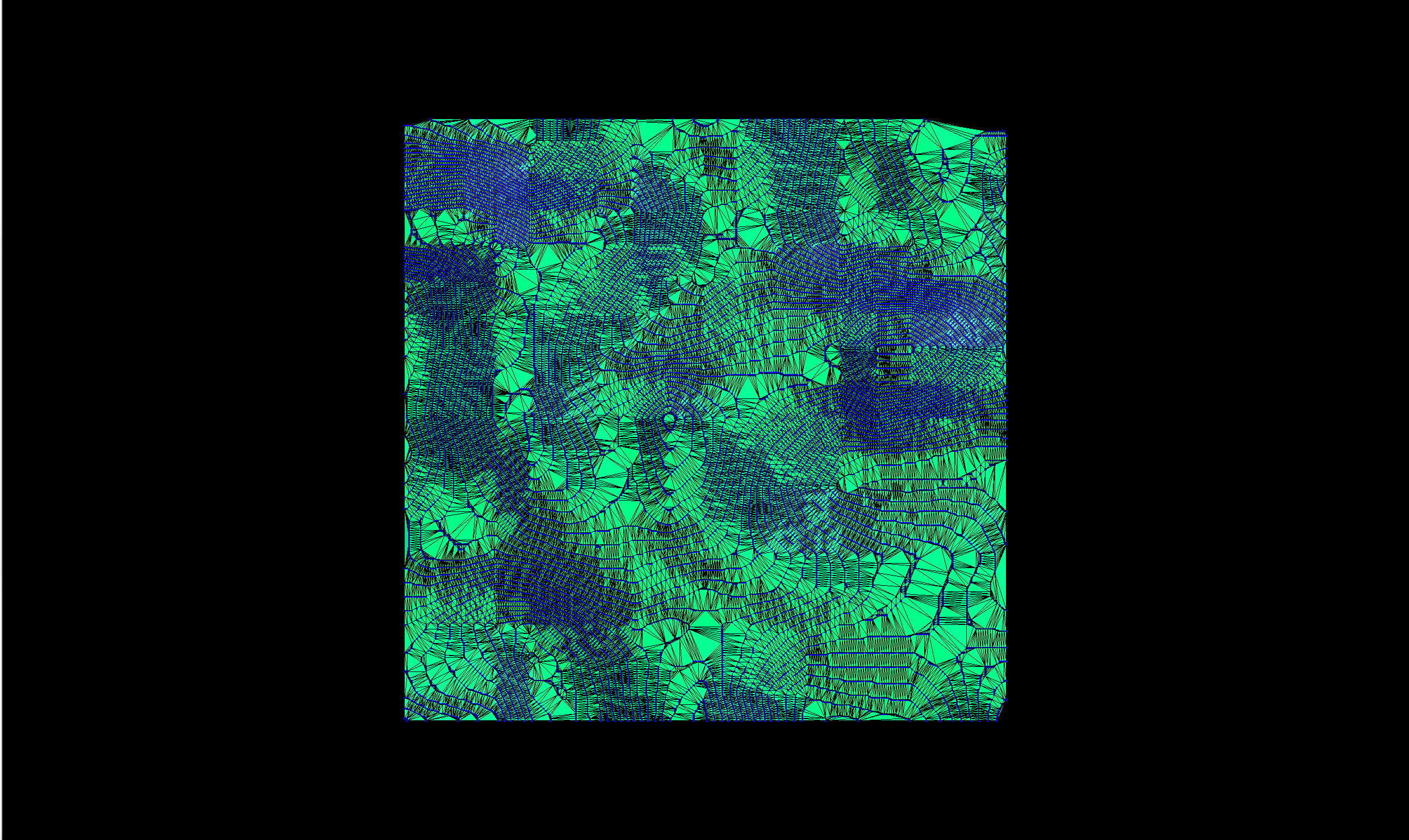
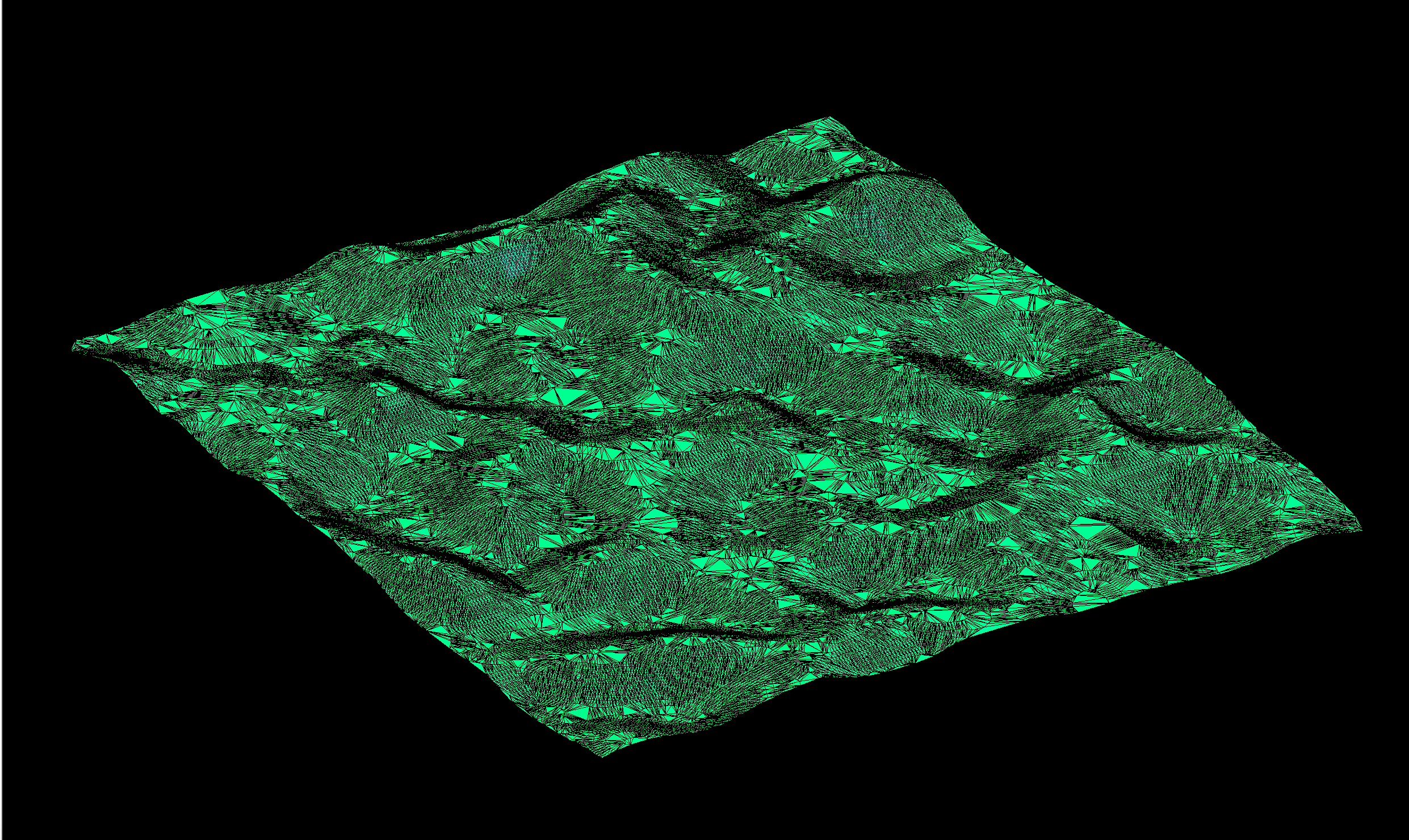
- Using the CGAL library, the contour-constrained meshes were re-triangulated:
Impact and Future Work
The pipeline developed during this internship successfully reduced mesh complexity making large-scale urban energy simulations more computationally efficient.
Future work could involve merging multiple tiles for broader terrain coverage, optimizing performance for larger datasets, integrating urban elements such as buildings and vegetation to create more comprehensive models.
Read the project report here.
References
Exa-MA. Methods and Algorithms for Exascale. 2024. Available at: Exa-MA ↩
Cemosis. Center for Modeling and Simulation in Strasbourg. 2024. Available at: Cemosis ↩
Mapbox. Mapbox Terrain-RGB v1. Mapbox Documentation. 2024. Available at Mapbox Terrain-RGB v1 ↩
CGAL: The Computational Geometry Algorithms Library. 2024. Available at: CGAL ↩